Enhancing Ingress Security in Azure Kubernetes Service with Application Gateway and WAF
Published
Aug 27, 2026
Desk
AI & ML
Views
843
Securing ingress in AKS is vital; combine Application Gateway and WAF for robust protection against external threats and improved workload safety.
The Critical Role of Ingress Security in Azure Kubernetes Service
Securing the ingress layer in Azure Kubernetes Service (AKS) is non-negotiable. Every request from the internet needs to pass through this layer before reaching your workloads, serving as the first defense against potential threats. If you neglect this crucial aspect of security, you're essentially opening the door to significant vulnerabilities. As organizations increasingly rely on cloud infrastructure, the security of ingress traffic must be a priority.
Many engineering teams focus predominantly on the internal structure of the Kubernetes cluster. They'll hammer away at securing nodes, scanning container images, or fine-tuning Role-Based Access Control (RBAC). And yet, a critical oversight often surfaces: ingress misconfigurations. These can inadvertently expose workloads and create an expansive attack surface that could easily be exploited by savvy attackers.
Understanding North-South Traffic
So, what exactly is North-South traffic? Let’s clarify the types of traffic within Kubernetes. North-south traffic is all about external requests coming into or leaving the cluster. This includes customer APIs, backend services, and other communication avenues. In contrast, east-west traffic handles internal communications among workloads, like service-to-service interactions.
The risk inherent in North-South traffic shouldn’t be underestimated. It's often the primary target for external attacks, given that it’s where the vulnerabilities are most impactful. Attackers increasingly focus on breaching perimeter defenses, and the ingress layer is practically the front door to your entire setup. If you're working in this space, overlooking ingress security could mean placing your organization in a precarious position.
Why Ingress Alone Isn't Enough
The typical initial setup for ingress often relies on basic ingress controls. While these controls allow for traffic distribution to various services, they lack the heightened security measures needed to combat sophisticated threats like SQL injection, cross-site scripting, or bot traffic. It’s like trying to defend a fortress with a flimsy gate — basic load balancers merely forward requests without the critical inspection required to detect malicious activities.
What does this mean for you? If your security strategy only includes basic ingress controls, you’re likely leaving your system wide open to exploitation. Companies that fall into this mindset often find themselves reacting to breaches rather than proactively managing them, a situation that could prove costly both financially and to their reputation.
Elevating Security with Application Gateway and WAF
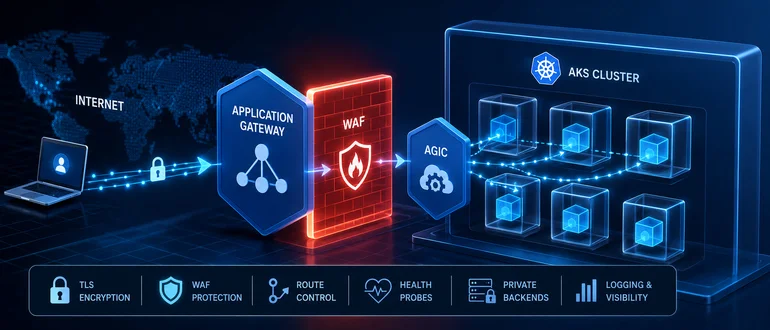
To combat these challenges, integrating the Azure Application Gateway with a Web Application Firewall (WAF) can significantly enhance security. The Application Gateway operates at Layer 7 of the OSI model, enabling it to make intelligent routing decisions based on various factors like hostnames, URL paths, and header data. This is way beyond what traditional load balancers can offer.
When paired with WAF, it’s not merely about forwarding traffic anymore; the gateway evaluates requests for malicious patterns before they can reach your Kubernetes services. This inspection layer is vital. It can stop an attack before it begins, acting as a shield rather than an afterthought.
It’s essential to grasp that the Application Gateway and WAF function as a cohesive unit. They’re not standalone solutions but rather complementary tools designed to safeguard applications. Together, their capabilities forge a formidable barrier against common web threats, streamlining security management through automation often overlooked by teams focused solely on internal configurations.
Implications for Future Security Strategies
As organizations continue adapting to cloud-native architectures, the implications of ingress security will only grow. You can't treat ingress as an afterthought anymore; it's a part of the toolkit required for effective security management. With cyber threats continually evolving, the combination of Application Gateway, WAF, and the Application Gateway Ingress Controller (AGIC) strengthens the security posture of any AKS environment.
This isn’t just about technical configurations; this alignment with cloud-native principles is essential. When these layers operate in concert, they effectively mitigate risks, transforming your ingress into a solid security barrier that protects your workloads right from day one.
In a time where every day seems to bring new reports of vulnerabilities and exploits, taking security seriously at the ingress layer must be viewed as a baseline requirement.
And this is the part most people overlook: managing ingress isn't just about keeping traffic flowing; it's about safeguarding the boundaries of your very infrastructure. As the stakes get higher, ensuring your ingress security is up to snuff becomes more significant than it looks.
Organizations that abide by these best practices are not just prepared to defend against the latest threats; they're also setting a standard for operational excellence in security. As the complexity of cloud environments increases, those who treat ingress with the seriousness it demands will benefit from fortified defenses and peace of mind.
Discussion
Sign in to join the discussion.