Echo aims to bolster its offerings with Minimus' technology assets, focusing on vulnerability management and secure application deployment.
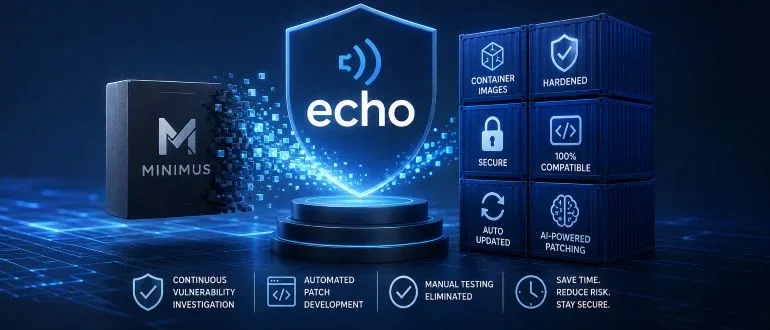
Echo has officially acquired select technology assets from Minimus, a provider noted for its hardened open source container images. This strategic move was prompted by Minimus's recent announcement of its closure. While some may view this acquisition merely as a response to market shifts, it reveals deeper implications for the future of secure application development.
The integration of these assets into Echo's existing offerings, which encompass hardened virtual machines, open source libraries, serverless functions, operating system packages, and Helm charts, is expected to enhance the company’s overall service portfolio. However, the success of this integration will depend on how effectively Echo can synthesize these new tools with its established practices.
Expanding Horizons for DevSecOps
Echo's CEO, Eilon Elhadad, expressed that these assets will be utilized to extend the current range of hardened software artifacts. These will be housed within a local repository system accessible by DevSecOps teams. Such a setup is more than just a technical upgrade; it represents a shift in how organizations think about security and development workflows. By enabling fast construction of secure applications across various Linux distributions, Echo is positioning itself to address a critical pain point for many developers: speed versus security.
One notable advantage lies in Echo's use of proprietary AI agents. These agents are tasked with identifying vulnerabilities and streamlining the development and validation of patches. This shift in responsibility can significantly reduce the workload on DevSecOps teams, who traditionally bear the brunt of having to assess the need for updates prior to execution. The real question is whether this AI can truly automate enough of the process without losing the human oversight that's often necessary for nuanced security assessments.
The Changing Economic Landscape of Open Source
Mitch Ashley, vice president at The Futurum Group, remarked that while Minimus's shutdown reflects shifts in the economics of hardened open source, it does not signify a decline in demand. The notion here is complex: the economic pressures on open source vendors are increasing, yet the need for secure, hardened applications remains. Organizations now face the difficult task of balancing budget constraints with security imperatives. The industry now awaits to see if Echo will pursue additional scanner integrations as part of their evolving product strategy, which would signal a commitment to comprehensive security solutions in an increasingly fragmented market.
While organizations currently face varying rates of transformation in their DevSecOps workflows, the surge in discovered vulnerabilities—fueled by advancements in AI—indicates a pressing requirement for a new approach to security. DevSecOps teams may soon find themselves prioritizing applications deemed essential while grappling with the volume of vulnerabilities created by AI-enhanced exploits. This isn't just a matter of keeping systems secure; it's about creating a mindset where security is built into the development process rather than tacked on as an afterthought.
Adopting Containers for Agility
A potential silver lining in this tumultuous environment is the growing embrace of containerization. Containers, after all, are generally easier to replace than traditional applications. This could provide a practical solution for organizations facing continuous vulnerability management. In principle, once a vulnerability is flagged, AI coding tools could facilitate rapid patch creation, allowing updates to be pushed to specific containers rather than necessitating an overhaul of extensive monolithic applications. This flexibility could make a significant difference for firms looking to maintain an edge in a competitive environment.
As the sector navigates these complexities, there’s hope that the heightened focus on security will ultimately improve application protection. But let’s not gloss over the fact that simply adopting containers won't fix everything. The critical challenge will be ensuring the forthcoming generation of applications is designed for security from the outset, covering everything from initial development to deployment and ongoing updates. If you're working in this space, you might already recognize this: security can no longer be an afterthought—it's a fundamental aspect of modern development.
Future Outlook and Broader Implications
The acquisition of Minimus's assets is indicative of a broader trend in the tech industry where consolidation is becoming more common amid shifting market dynamics. As companies like Echo absorb smaller providers, it raises questions about competition and innovation. Will this lead to a few dominant players controlling the market for secure container solutions? Or will it spur new entrants to emerge with alternative approaches? This is something to keep an eye on.
Moreover, as Echo integrates these assets and enhances its offerings, the implications for customers could be far-reaching. Organizations might soon find themselves with access to more sophisticated tools that could revolutionize their approach to security—but only if they can adapt their strategies accordingly. The next few months will be telling as Echo sets the stage for its future direction—one where the lines between rapid development and robust security become increasingly blurred.
Frequently Asked Questions
What did Echo acquire from Minimus?
Echo acquired technology assets from Minimus, a provider of hardened open source container images that recently announced it was shutting down.
How will Echo use the Minimus assets?
Echo plans to incorporate them into its existing portfolio of hardened software artifacts and make them available through its repository platform.
How does Echo use AI for vulnerability remediation?
Echo employs proprietary AI agents to investigate vulnerabilities and facilitate the development and validation of patches distributed through updated hardened artifacts.
Discussion
Sign in to join the discussion.