Explore how continuous assurance transforms GRC practices in cloud-native environments, ensuring real-time compliance and risk management.
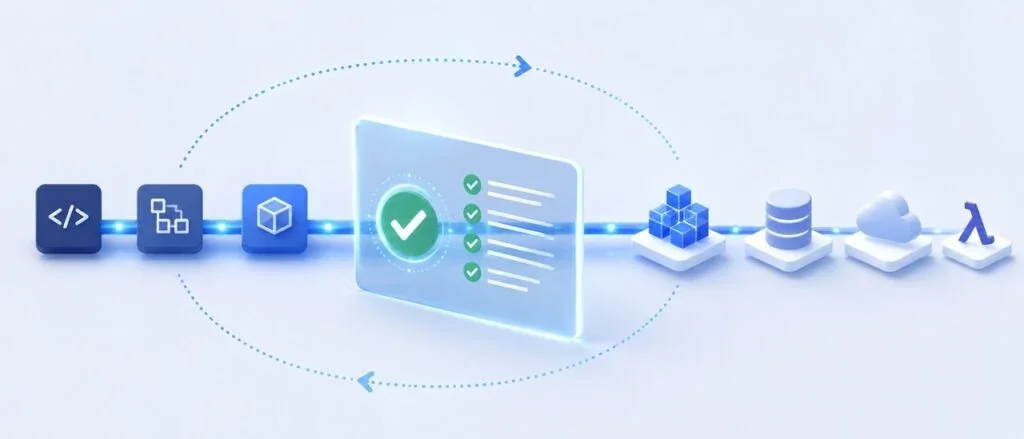
The traditional approach to governance, risk, and compliance (GRC) management revolved around periodic audits and control verifications, a methodology rooted in slower, static IT environments. This framework has long been the backbone of many compliance strategies, focusing on routine checks to ensure that systems meet regulatory and organizational standards. However, as organizations shift toward cloud-native architectures characterized by microservices, ephemeral infrastructures, and rapid development cycles, this outdated paradigm risks obsolescence. Static models simply can't keep pace with the dynamic configurations of today's cloud systems, threatening compliance without the agility to adapt quickly.
In cloud-native settings, where applications evolve multiple times daily, reliance on point-in-time compliance checks becomes increasingly impractical. The conventional process of defining controls, documenting their status, and validating compliance through scheduled audits cannot adequately address the rapid transformations occurring within these infrastructures. For instance, a small change in configuration can render an audit's findings obsolete almost immediately. This reality necessitates a significant shift from traditional GRC methods toward continuous assurance, which promises a more adaptive and responsive approach.
The Limitations of Point-in-Time Compliance
Legacy frameworks like SOC 2 and ISO 27001 were constructed with the understanding that environments change slowly, providing a basis for controls that can be validated through snapshots of data. This approach fundamentally collapses under the pressures of a constantly evolving cloud landscape. Think about a scenario where compliance checks reveal that all S3 buckets are encrypted. By the next month, new microservices may be added, existing configurations could change due to agile development practices, and the once-conformed state now risks non-compliance. The reality is that you're only as good as your last audit, which may have already become irrelevant.
Such an approach often means organizations are either unaware of their compliance status or erroneously comfortable due to dated checklists. This leads to potentially significant risks, especially in industries where data breaches or security failures can cost millions. Timeliness is everything, and relying on audits that occur months apart fails to acknowledge the fluid nature of compliance in cloud environments.
The Case for Continuous Assurance
Continuous assurance reframes compliance as an ongoing process rather than a series of discrete events. It demands a cultural and procedural shift within organizations, advocating real-time compliance verification that aligns with agile methodologies. Instead of periodically questioning, “Are we compliant?”, continuous assurance transforms this to, “How do we maintain compliance at every moment?” In a cloud-native environment, where applications are inherently programmable, the attributes that complicate compliance also provide the foundation for continuous monitoring.
Core Aspects of Continuous Assurance
Controls as Code: Cloud infrastructures are increasingly defined declaratively through languages like Terraform or CloudFormation. What’s significant here is that compliance controls can likewise be expressed as code. Tools that employ policy as code, such as Open Policy Agent (OPA) and Kyverno, facilitate the establishment of compliance parameters directly within deployment processes. This move enhances transparency and simplifies enforcement because compliance checks become integrated into the development workflow, reducing the likelihood of errors and oversights.
Automated Evidence Generation: Continuous integration and continuous deployment (CI/CD) pipelines can be designed to generate compliance evidence automatically throughout the software delivery process. Imagine not having to compile evidence during an audit window and instead having compliance manifest as a byproduct of daily operations. By aligning evidence generation with development efforts, organizations can create a timeline that reflects ongoing adherence to established policies.
Proactive Drift Detection: To effectively manage compliance, teams can implement automated tools capable of detecting deviations from established compliance baselines instantly. This immediacy is vital—allowing organizations to rectify potential security weaknesses or misconfigurations before they lead to compliance breaches. In a world where one misconfigured setting can expose sensitive data, proactive measures are essential.
Real-Time Risk Assessment: Continuous assurance empowers organizations to maintain a dynamic risk posture based on live telemetry. Unlike static risk assessments, which can quickly become outdated, real-time data provides a continuously evolving understanding of risk exposure. This means decision-makers have access to up-to-date information regarding deployed applications and their vulnerabilities, ensuring they can act swiftly to safeguard their environments.
Implications for GRC Teams
Embracing continuous assurance isn't just about introducing new technology; it fundamentally changes the roles and responsibilities within an organization. GRC teams must evolve, approaching compliance with a more integrated mindset that bridges engineering and development functions. This shift requires close collaboration among compliance, security, and DevOps teams, emphasizing an integrated solution that weaves compliance into the normal software development lifecycle.
Even auditors will find their roles transformed. Rather than slogging through lengthy manual evidence compilation, they'll have access to continuous, granular data streams. Such access allows for on-demand verification and shifts the focus from rigid pass/fail metrics to a more nuanced understanding of compliance trends over time. Organizations implementing continuous assurance can better visualize how quickly compliance issues are resolved, how frequently systems drift from standards, and ultimately how they can optimize their operations.
Cultural Changes Driving Continuous Assurance
This cultural transition might be one of the toughest challenges organizations face when implementing continuous assurance. Traditional GRC practices usually centered around structured audit cycles, where annual reports determined success or failure. With a continuous approach, the focus shifts to fostering an always-on compliance system that prioritizes ongoing engagement with engineering teams. This shift involves reshaping the mindset of engineering teams to view compliance not as an external hindrance but as an essential ingredient in building resilient systems.
Typically, successful organizations will initiate their continuous assurance journey by identifying crucial controls, translating them into code-based policies, and weaving those into existing CI/CD pipelines. This gradual approach allows for expansion over time, embedding continuous assurance even deeper into the fabric of the organization’s operations. The end goal is an environment where compliance isn’t seen as a standalone project but rather as an integral part of daily business operations.
Future Outlook: Adaptation and Resiliency
The rapid evolution of cloud-native environments is set to reshape compliance strategies worldwide. Organizations that truly embrace continuous assurance are better positioned to navigate compliance audits more efficiently. Moreover, they will achieve a nuanced, real-time understanding of their security posture. And as the marketplace becomes more sophisticated, those firms will not merely react to compliance demands, but proactively manage them. What this means for you—if you're working in this space—is that adapting now won't just ensure you're compliant; it’ll set you up for success in an increasingly complex regulatory environment.
Discussion
Sign in to join the discussion.