Komodor's new platform streamlines the deployment of AI agents, integrating seamlessly into existing workflows for site reliability engineers.
Introducing AI Agents to Kubernetes Workflows
Komodor has taken a significant step in enhancing the capabilities of site reliability engineers (SREs) managing Kubernetes clusters by introducing the ability to deploy agentic artificial intelligence (AI) workflows within its platform. This move reflects a broader trend where organizations are increasingly leaning towards automation to manage complex systems. The integration of AI into traditional DevOps practices isn’t just a technical upgrade; it’s a paradigm shift in how operational responsibilities are perceived and executed.
According to Itiel Shwartz, the company’s CTO, the Komodor Agentic Operations Platform allows SREs to utilize the same familiar workflows for deploying AI agents as they do for other workloads. This consistency reduces the learning curve, allowing teams to adapt more quickly and effectively. The introduction of AI into these workflows is intended to streamline processes, automate routine tasks, and ultimately free up teams to focus on more strategic initiatives.
Streamlined Deployment with Familiar Workflows
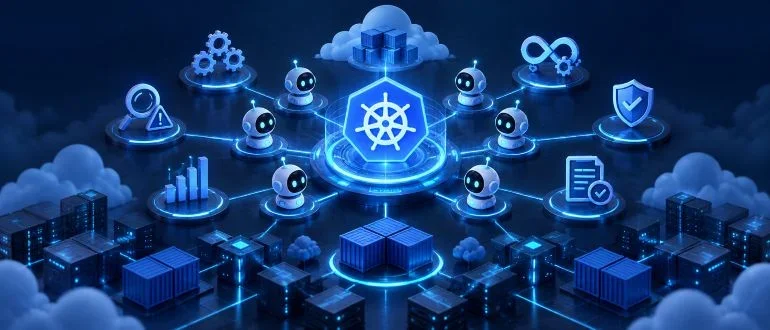
This platform is built on the foundational AI SRE technology that Komodor offers, enabling the deployment of both custom AI agents and those imported into the system. The ability to leverage existing DevOps workflows significantly enhances the deployment process. By integrating new agents within the context of established practices, SREs can efficiently roll out these tools without disrupting their existing operations. Shwartz emphasizes that such integrations enhance efficiency by including templates for troubleshooting, optimizing AI consumption, and remediating CI/CD pipelines.
Komodor's platform also features over 50 pre-built specialist agents, skills, integrations, and Model Context Protocol (MCP) servers. These allow DevOps teams the flexibility to tailor workflows, including adding or removing steps, adjusting routing, and incorporating their agents. Such adjustability is vital, considering that different teams have varying needs and operational contexts. Shadow-testing of new agent versions makes it possible to compare performance and route tasks to the appropriate models before final implementation. This testing phase is critical; it provides a safety net that can avert costly errors and service interruptions in production.
Governance and Control in Agent Deployment
Organizations can convert an existing skill, script, or runbook into a governed agent, supporting the importation of agents created with third-party frameworks or the development of new ones through Komodor's SDK. This flexibility is essential as it allows teams to preserve existing assets while enhancing them with modern AI capabilities. The platform’s role-based policies delineate who can invoke agents and specify the credentials and tools accessible to them. Furthermore, it introduces guardrails to regulate agent behavior, scrutinizing inputs, tool calls, and response models to ensure necessary human approvals for any action taken by an agent. This level of scrutiny is paramount in maintaining operational integrity and security.
DevOps teams also have the ability to impose spending limits and provide a complete audit trail for full visibility over actions performed by agents. This kind of auditing fosters accountability, a necessity in environments where AI agents might handle sensitive or high-stakes tasks. The insight into operations provided by these trails can inform future decision-making processes and operational adjustments.
The Shift to Managing AI Workflows
Kubernetes has swiftly become the preferred choice for deploying AI workloads. The rise of AI agents means transitioning DevOps workflows to accommodate possibly thousands of operational agents in production. This transformation presents a new challenge for DevOps teams. Responsibilities are shifting from hands-on tasks to the nuanced management of extensive agentic engineering workflows, as pointed out by Shwartz. This shift raises concerns not only about workload distribution but also about the skills required for effective management of AI systems.
In this evolving context, SREs will likely employ a single AI agent to manage the efforts of multiple agentic entities, each trained for specific tasks. If you're working in this space, the implications for team dynamics could be profound. You’ll need to think about not just managing systems, but orchestrating a collective of intelligent agents that contribute to operational goals. It’s a balancing act that could redefine roles within teams.
Diving into Governance with Insights
Mitch Ashley, vice president at the Futurum Group, highlights the limitations of agentic operations, which are currently shaped by team capabilities to observe, control, and validate agent actions within production environments. He suggests that continuing to use established pipelines, approvals, and audit trails can place governance within familiar contexts. Here’s the thing: while the potential for these agents is vast, unchecked automation can lead to unforeseen complications if governance isn’t prioritized.
The core question remains: will this platform serve as a singular governing control plane for all operations, or will it simply be another component to reconcile? This ambiguity could lead to fragmentation within systems, where different agents operate under various governance frameworks, complicating oversight and management.
Looking Ahead: The Adoption of AI Agents
The pace at which DevOps teams adopt and implement AI agents is likely to differ across organizations. However, it seems increasingly clear that it’s not a matter of "if" AI agents will be utilized, but rather "when" and "to what extent." As teams begin to recognize the benefits—particularly in efficiency and scalability—the urgency to integrate these technologies will only grow. For some organizations, the faster they adapt, the more competitive their positions will be.
Ultimately, the effective deployment of AI agents will hinge on a blend of technological choices and strategic governance. How organizations handle this transition will shape their operational success and their teams' effectiveness in leveraging AI as a powerful resource. (And this is the part most people overlook.) The thoughtful integration of AI could well pivot into distinguishing features for tech-savvy SREs and their teams in the coming years.
Discussion
Sign in to join the discussion.