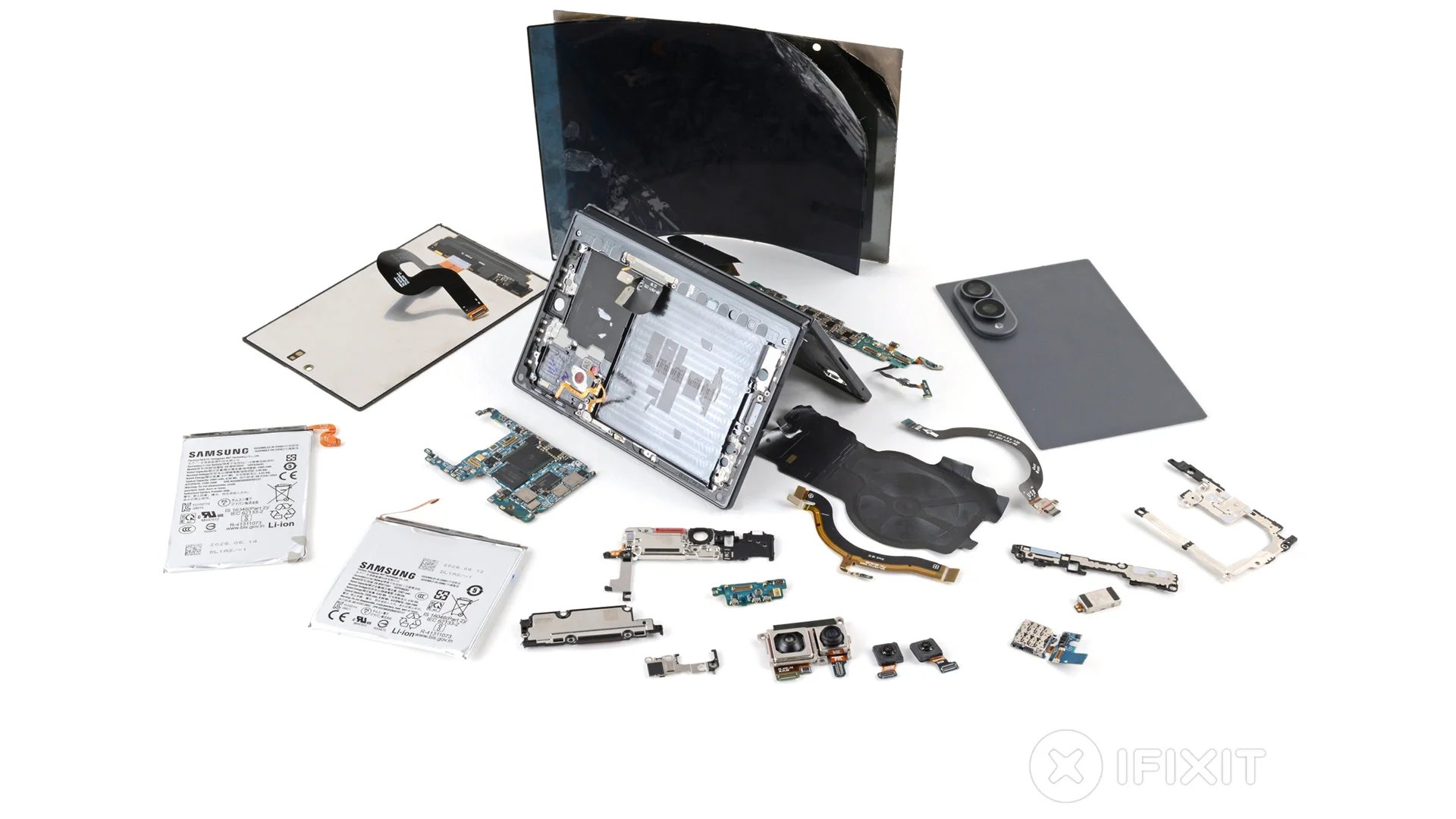
The iFixit teardown of the Samsung Galaxy Z Fold 8 exposes significant repairability issues, despite some functional design improvements.
Design vs. Repairability
While the Samsung Galaxy Z Fold 8 is celebrated for its sleek design and advanced technology, a recent teardown by iFixit highlights persistent repair challenges that overshadow its appeal. Although foldable phones have gained a lot of attention in recent years for their potential to revolutionize mobile usability, the experience isn’t as straightforward as it seems. The Galaxy Z Fold 8 represents a significant step forward in foldable phone design, but this progress comes with certain trade-offs that could frustrate users and technicians alike. The allure of a foldable device often lies in its compactness and versatility, yet those benefits can be rendered moot by hurdles in repairability and longevity.
Repair Score and Key Issues
iFixit awarded the Galaxy Z Fold 8 a low repairability score of 4 out of 10. This score is somewhat indicative of the trade-offs consumers face when choosing innovative smartphones. The main culprits behind this low rating are an exceptionally delicate inner display and a complex hinge mechanism that complicates repairs. This adds to ongoing criticism surrounding smartphone manufacturers prioritizing aesthetics and features over ease of maintenance. Furthermore, the device's dust protection features fall short in practical applications, limiting its usability in everyday environments. If you're working in this space, you’ll certainly recognize that a device with such a high premium should ideally hold up to more than just a careful lifestyle.
Battery Access and Modularity
On a positive note, the Fold 8 uses standard Phillips and JIS screws, and the modular USB-C ports simplify some repairs. This might suggest that not all hope is lost when it comes to maintaining the device. The increase in battery capacity by about 8.8% accompanied by pull-tabs for easier battery removal is a welcome feature. However, this small improvement doesn't erase the significant caveat: accessing just one battery can necessitate risking damage to the outer screen, illustrating the intricacies involved in undergoing repairs. Therein lies the challenge of designing a highly functional device while also considering how to keep it functional over time. If repairs lead to further complications, consumers may hesitate to invest in premium devices like this one.
Spare Parts Availability
The requirement to disassemble the entire phone to reach the paired inner display and hinge assemblies is concerning for several reasons. For starters, it heightens the level of difficulty associated with repairs. Compounded by the scarcity of official spare parts, fixing the Galaxy Z Fold 8 might prove to be a challenging task for technicians and consumers alike. In an age where consumers are increasingly seeking longevity from their gadgets, this shortfall could lead to frustration and premature device disposal. What this means for you is a potential future filled with escalating repair costs or the painful decision to upgrade earlier than intended.
Implications and Future Outlook
The issues surrounding the Galaxy Z Fold 8's repairability have broader implications for the foldable smartphone market and mobile devices at large. As smartphones become more advanced and intricate in their design, manufacturers face a fundamental question: How do you create a device that is both appealing and maintainable? Consumers are becoming aware of the repairability factor, which may influence their purchasing behavior in the long term. If brands continue to neglect this aspect, they might face backlash from an increasingly discerning audience.
This kind of critical scrutiny from repair advocates and environmentally conscious consumers could potentially reshape how smartphone manufacturers approach design in the future. Companies that prioritize accessibility for repairs could come to find themselves in a more favorable position within the market. (And this is the part most people overlook.) If balancing design with repairability becomes a norm rather than an exception, we could start to see shifts in product strategies across the industry.
Similarly, as legislation around repairability and consumer rights evolves, there’s increasing pressure on manufacturers to adapt. It's not just about making a stylish phone anymore—it’s about ensuring that it can withstand the rigors of daily life, and that it can be readily repaired when issues arise. The Galaxy Z Fold 8, with its high design appeal and low repairability score, stands at a crossroads. The path it takes could have lasting consequences not only for future iterations of Samsung's foldable line but also for the mobile phone industry as a whole.
Discussion
Sign in to join the discussion.