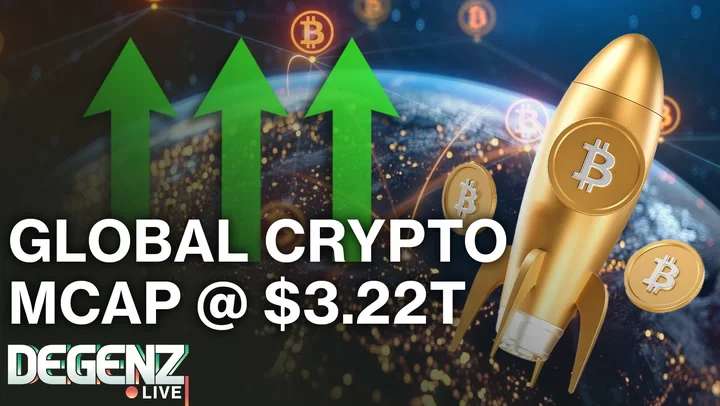
The crypto market cap reaches $3.22 trillion, with notable institutional endorsements and ongoing developments in regulation and security.
Market Movements and Major Gains
The global cryptocurrency market cap has surged by 2%, hitting approximately $3.22 trillion. This uptick is meaningful in a sector known for its volatility—showcasing the resilience and growing maturity of the market. Significant price movements include Bitcoin increasing by 1% to $93,780. The leading cryptocurrency’s slight rise may suggest stabilization after a period of turbulent fluctuations. Ethereum, with its recent rise of 2% to $3,240, continues to solidify its position as the second most popular cryptocurrency, buoyed by ongoing developments in its decentralized finance (DeFi) ecosystem. Solana shows particular vitality, gaining 3% to reach $139. This performance can often be attributed to its ongoing upgrades aimed at enhancing transaction speeds and reducing costs, making it a favored choice among developers.
However, XRP's remarkable growth of 12%, soaring to $2.37, signals a noteworthy trend. This spike doesn't appear rooted solely in market speculation; rather, it could reflect a market correction following legal clarity in its regulatory disputes. Observers should understand that XRP's journey is emblematic of broader themes in the crypto market—like how regulatory scrutiny can mold investor sentiment. Investors are increasingly wary, and competition is heightening, creating an environment where gains might be short-lived for projects that fail to adapt to changing circumstances.
Institutional Developments
In a significant development, Bank of America has introduced crypto recommendations tailored for its wealth management clients, suggesting an allocation of up to 4% of their portfolios. This move highlights a shift in how traditional financial institutions are beginning to embrace cryptocurrencies as a mainstream investment vehicle. They’re not just passive observers but are actively participating in the evolution of financial technology.
Meanwhile, Morgan Stanley's recent filing for a Solana Trust with the SEC marks another key milestone. The popularity of Solana among institutional clients could be seen as a testament to its growing legitimacy and potential for long-term growth. As financial giants line up to offer cryptocurrency products, it raises questions about the extent of institutional interest and the implications for average investors. Will this lead to greater price stability or just escalate the market’s speculative tendencies?
Goldman Sachs has made headlines by upgrading Coinbase to a ‘Buy’ rating while concurrently downgrading eToro. This reallocation of support underlines how the equities associated with cryptocurrency exchanges are subject to intense scrutiny. Coinbase’s prominence as a secure and reliable exchange could be contributing to this newfound optimism, but investors should be cautious. Predictions of firm valuations can crumble just as quickly, especially as exchange operations come under increased regulatory focus.
Regulatory and Security Updates
Japan's finance minister has called for a deeper integration of cryptocurrencies, advocating for lower taxes and essential reforms at the exchange level. This political support is significant as it signals at least some governments are recognizing the potential of cryptocurrencies to enhance economic engagement and innovation. Countries are beginning to understand that merely regulating crypto isn’t enough; facilitating its growth may ultimately prove more beneficial.
On the technical side, Ethereum co-founder Vitalik Buterin announced that Ethereum has addressed the “Blockchain Trilemma.” Through its Layer-2 development strategy, the network aims for effective decentralization while maintaining scalability. Such advancements are critical for Ethereum, especially given the growing pressure from competing networks. Solana and Avalanche, for instance, have emerged as strong contenders with their speed and efficiency. Buterin's statements point toward a broader industry acknowledgment: scaling solutions must be prioritized to keep blockchain applications viable long-term.
Security issues continue to loom large in the crypto world. Kraken is conducting an investigation into allegations that customer data has been sold on the dark web, demonstrating how cybersecurity remains a burgeoning concern for both exchanges and users alike. Trust can be easily diminished with incidents like this, echoing reminders that the crypto sector, despite its glamorous allure, is not without danger. Meanwhile, Ledger users must remain vigilant after a data breach involving its e-commerce partner, Global-E, which compromised customer contact information. Data security is a pressing issue that’s often overshadowed by price volatility but is equally critical to assess.
Implications and Future Outlook
The current movements in cryptocurrency markets and institutional actions signal a maturing ecosystem. However, the mixed messages coming from regulatory bodies can create uncertainty. For investors, this means you should weigh your options carefully against a backdrop of both opportunity and risk. The conversations about taxes and regulation, particularly in Japan, may set precedents for other countries, increasing the likelihood of institutional adoption worldwide.
Security breaches can’t be sidelined, either. The cryptocurrency industry must innovate continuously to safeguard data. With developments like hardened exchange protocols and enhanced consumer education, stakeholders might just begin to bridge the gap of trust required for broader adoption.
What concerns long-term success? A balanced approach that integrates technology, regulation, and security will be vital moving forward. The potential for growth in decentralized finance, NFT marketplaces, and Web3 applications remains strong, but only if fundamental issues like security and regulatory acceptability are adequately addressed. This is more significant than it looks.
Discussion
Sign in to join the discussion.