Explore how cloud native environments challenge traditional dependency mocking software and what features are essential for effective integration testing.
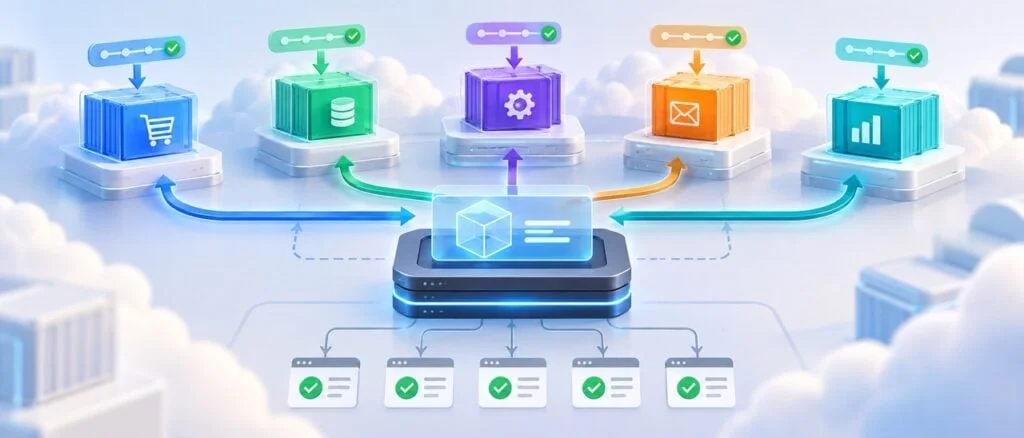
Today's dependency mocking tools often fall short for cloud native architectures, primarily because they were designed in an era of predictable release cycles. In contrast, cloud native environments introduce a dynamic landscape where multiple services deploy independently, complicating integration testing and accuracy.
The Shift to Cloud Native: Gaps in Test Accuracy
The core issue arises from the gap between how dependency mocking software was initially conceived and the nuances of a cloud native architecture. Where once services had well-defined release schedules and predictable behaviors, the cloud native model allows services to evolve at their own pace without necessarily coordinating changes with dependent services. This transformation creates a breeding ground for integration test inaccuracies, fueling a disconnect between the development teams and their downstream dependencies.
This lack of synchronization complicates testing, especially in scenarios where one service—like a payment processing system—updates without notifying other services that rely on it, such as order management or inventory systems. The former's mocks, representing outdated behaviors, risk becoming increasingly unreliable with each new deployment. This situation leads to an accumulation of "behavioral debt" over time, where consistent test outputs mask underlying discrepancies caused by rapid iterations in upstream services.
Requiring More from Dependency Mocking Solutions
With the evolution of service architectures, dependency mocking software must adapt to meet several key requirements:
- Awareness of Deployment Events: First and foremost, a mocking tool should possess the capability to detect upstream deployment events automatically. Notifications about service deployments should trigger an immediate review of the mock configurations, ensuring they're still valid. Traditional communication methods like Slack messages or changelogs fall short in speed and reliability; an automated system connected to CI/CD processes is essential.
- Behavior Capture Techniques: Accurately capturing and replicating the real-time behavior of services is crucial, especially when the behavior documented does not match what transpires after updates. Mocking software that derives its functionalities from actual interactions rather than static specifications can ensure accuracy remains aligned with the operational reality.
- Handling Non-Deterministic Fields: Many cloud native responses contain variable identifiers that might alter with each request, such as timestamps or generated IDs. A software solution must intelligently recognize and manage these variables, preventing unnecessary test failures that confuse genuine development issues with randomness in data.
- Cross-Service Change Tracking: Finally, clarity on how upstream services are evolving is vital. A tool should provide insights into the specific alterations in service behavior, such as field changes or type alterations. This ensures that if a mock requires adjustments, the development team has enough information to handle it without disrupting the application code.
A Case for Enhanced Tools: The Keploy Approach
One tool that stands out in addressing these needs is Keploy. By leveraging eBPF-based traffic capture at the kernel level, Keploy's unique approach to dependency mocking centers around real-time HTTP communication between services rather than relying solely on static documentation, offering a more truthful replication of operational behavior.
This process not only accommodates varying service languages effortlessly, making it suited for polyglot environments, but also integrates with CI/CD pipelines to ensure that mocks stay current with the latest changes in service behaviors. This capability is fundamental in avoiding the pitfalls of outdated mocks in a fast-paced deployment regime.
Navigating Tool Selection in a Cloud Native Environment
When evaluating dependency mocking software for cloud native environments, teams must pivot their focus from conventional factors like ease of setup and support resources to more strategic considerations. Vital questions should include:
- Does the tool recognize when upstream changes occur?
- Can it capture and reflect current service behavior effectively?
- How transparently does it communicate behavioral changes?
- Does it provide a systematic approach that scales across multiple services, removing the burden of manual oversight?
Solutions that align with these criteria effectively address the challenges posed by modern cloud architectures. In essence, if dependency mocking tools have not evolved in parallel with the shift to cloud-native environments, teams may find themselves on a road to diminishing integration test effectiveness as their upstream services continue to adapt and evolve. Without implementing a strong suite of updated functionalities, organizations risk facing significant obstacles in maintaining accurate and reliable testing workflows.
Discussion
Sign in to join the discussion.