The Tensor G6's upgraded TPU enhances machine learning performance, unlocking new capabilities in the Pixel 11 that users may not fully appreciate.
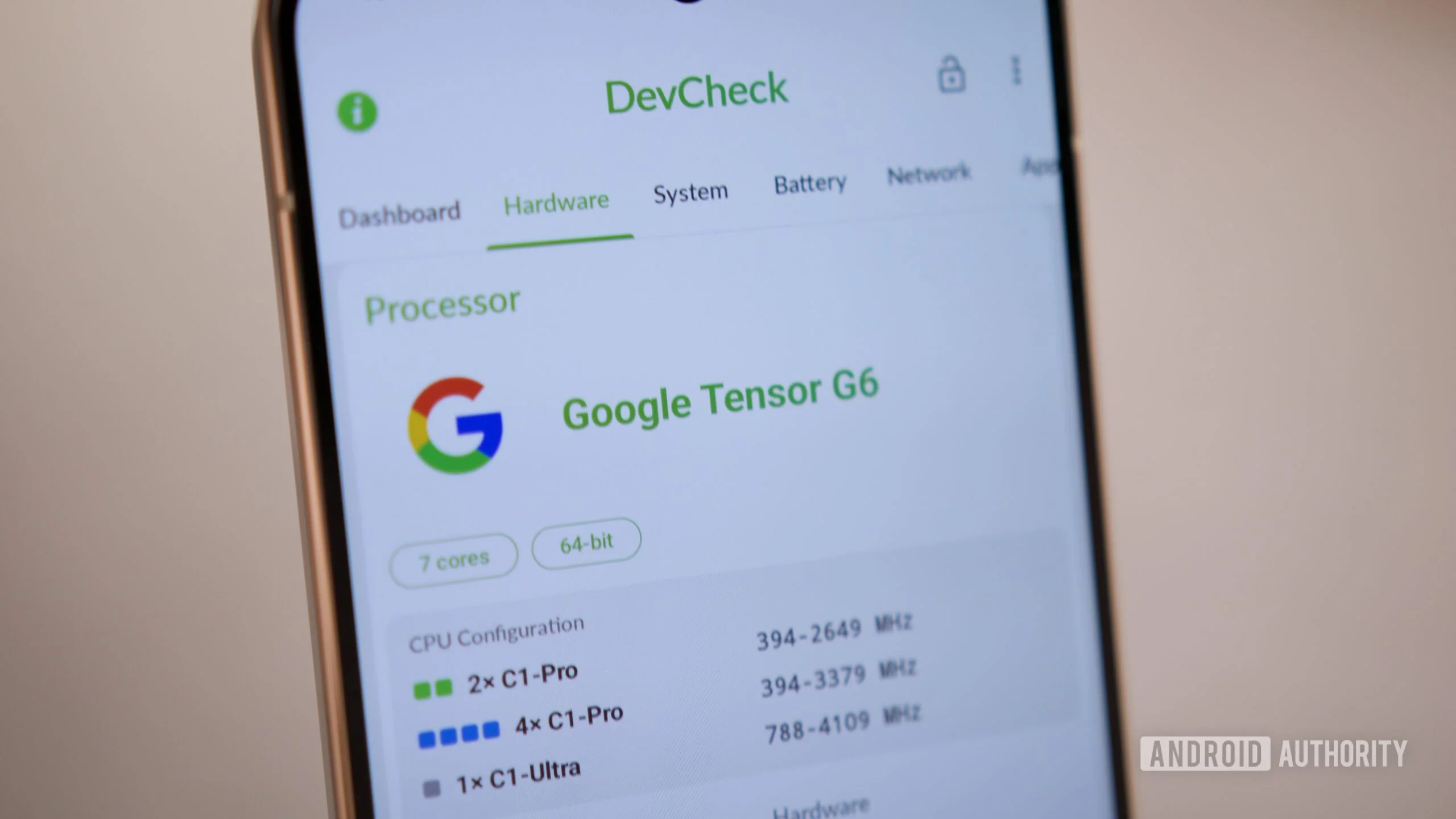
Enhancements in the Tensor G6's TPU
Among the notable upgrades in Google's Pixel 11 series, the Tensor G6's advanced Tensor Processing Unit (TPU) deserves particular attention. Google touts a 50% increase in computational power and performance boosts of up to 3.5 times for specific tasks, which could lead to significant improvements in user experience. However, such bold claims must be scrutinized in the context of industry standards and user expectations.
The TPU’s enhancement isn’t just another tick in the box for performance metrics. This increase in computational power reflects an ongoing trend within the industry aimed at offloading machine learning tasks from traditional CPUs and GPUs. Other manufacturers have been racing to develop specialized chips that cater specifically to AI needs. Google's continuous investment in this area signals its commitment to establishing a foothold in competitive markets. The integration of a more powerful TPU could put Google on par with other tech giants like Apple and their Neural Engine, which they've leveraged to enhance application performance in critical areas such as photography and augmented reality.
The Role of the TPU in Device Functionality
Understanding the TPU's function is essential to appreciate its impact. While the Tensor G6’s CPU manages applications and its GPU typically focuses on gaming, the TPU excels at handling complex machine learning processes. This includes dedicated capabilities for dot-product matrix math and access to high-speed memory, positioning it as the core AI processor within the Pixel lineup. Its architecture is designed to process tasks in parallel, thereby considerably speeding up operations that require large-scale data analysis.
Tasks such as voice transcription, speech recognition, and text predictions leverage this technology without needing to rely on cloud services, thus enhancing performance and privacy. This local processing capability is particularly significant; it allows users to execute tasks more swiftly while minimizing latency—a crucial factor in the user experience. For tech-savvy consumers who prioritize real-time interaction in applications, the TPU serves as a key asset. The immediacy of responses—ranging from predictive text to instantaneous translation—truly defines how we engage with our devices today.
Moreover, the TPU is likely to play a critical role in advancing future AI-driven features. With these enhancements, Google stands to better compete in the smart assistant arena, where speed and efficiency often make or break user satisfaction. The juxtaposition of Apple's Siri and Amazon's Alexa underscores the necessity for quicker processing in AI applications. Users no longer tolerate lag; they expect fluid interactions and immediate responses.
Industry Context: Competing Technologies
In the realm of mobile processors, Google’s TPU isn’t alone. There's a myriad of competitors, each attempting to carve out their niche. Apple’s M1 and M2 chips provide an integrated approach where both CPU and GPU collaborate alongside neural engines to bolster machine learning tasks. Similarly, Qualcomm's Snapdragon processors include AI features that cater to similar needs. The competition is fierce, and the enhancements to Google’s TPU must be more than just impressive figures on paper; they need to translate into real-world performance gains.
What sets Google apart is the software integration with its extensive ecosystem. The optimization of the TPU with Android and Google’s array of services means that it can tailor performance to enhance user applications in a uniquely cohesive way. However, whether that translates to everyday user experiences remains to be seen. Can Google convince consumers that their devices are not just powerful in theory—but effective in practices? That said, potential buyers will look closely at tests and reviews to discern whether these upgrades yield tangible benefits.
Implications for AI and User Experience
The implications of this upgraded TPU technology will extend beyond just a better Pixel. As machine learning becomes increasingly foundational to mobile device functionality, improvements in processing power directly impact user experiences across various applications. You'll find that features like real-time translations, improved language processing, and smarter camera functionalities become refined artifacts of better hardware.
If you’re working in this space, think about how a faster, more capable TPU could not only improve current applications but also pave the way for future innovations. The potential for Google to develop even more sophisticated AI-driven services hinges on this performance leap.
Moreover, this evolution in processing power raises questions about privacy and data security. With more capabilities being handled on-device, there's a potential shift in how personal data is stored and processed. The growing emphasis on privacy might even make the ability to handle sensitive information locally a major selling point for a new wave of devices. Users might gravitate towards systems that promise privacy without sacrificing functionality. (And this is the part most people overlook)
In conclusion, the advancements seen in the Tensor G6's TPU mark a significant stride in mobile processing technology and could place Google in a favorable position against its competitors. Yet, the real test will lie in how these enhancements are executed in practice. Only with diligent performance validations, transparency in usage, and ongoing innovation will Google truly separate itself from the pack.
Discussion
Sign in to join the discussion.